
By Tesseltje de Lange, Karen Geertsema & Ricky van Oers
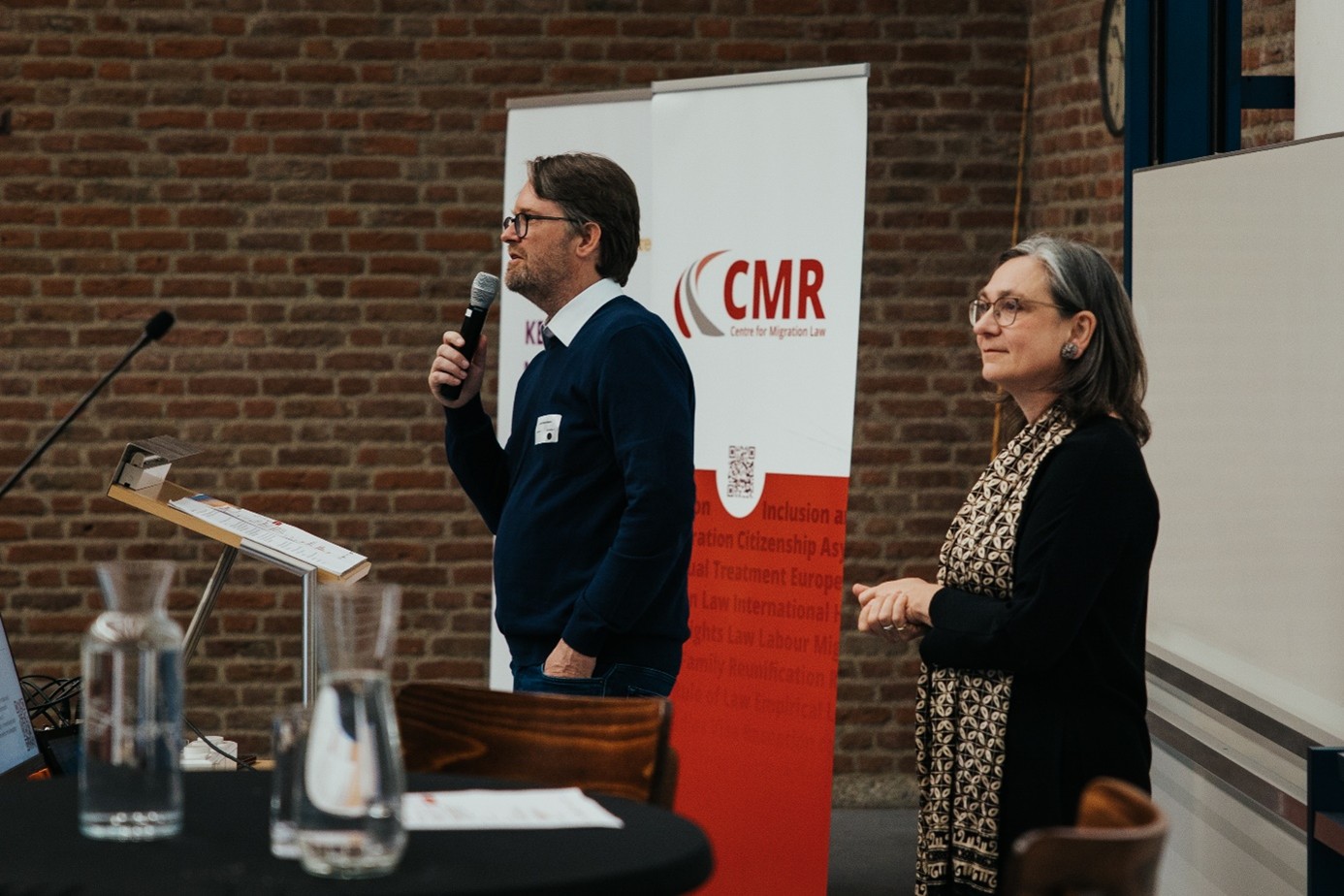
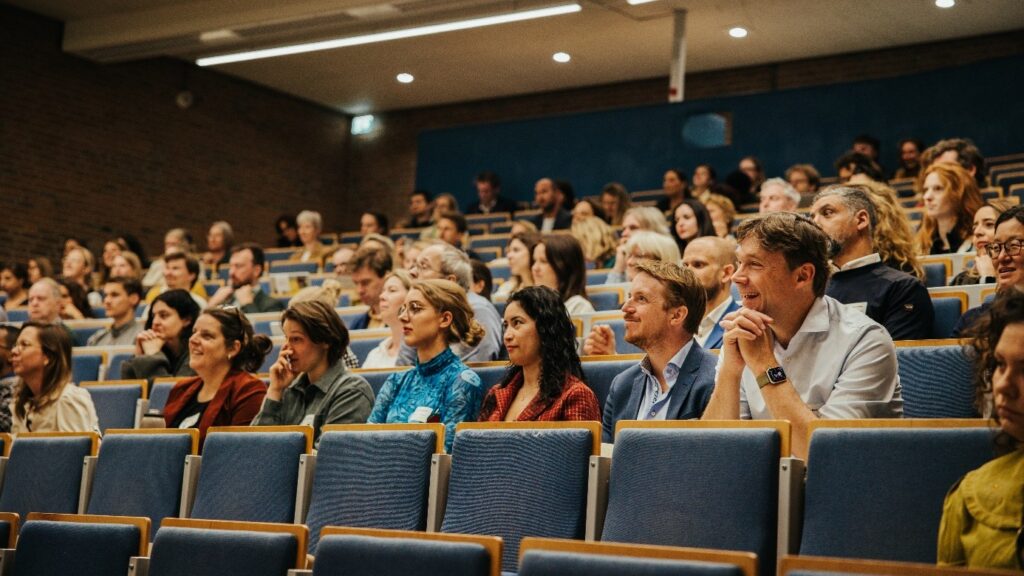
What a day! On 22 May 2025, over 170 people gathered in Nijmegen to share knowledge on the topic of ‘Work and Migration Law’. Topics discussed included Central and Eastern European workers in distribution, posted drivers from outside Europe, international students and researchers, and the rights of undocumented workers and employer sanctions. The day was organized by the Centre for Migration Law (CMR) at Radboud University’s Faculty of Law in collaboration with the Migration Law Netherlands Foundation (SMN). The SMN plays a key role as a knowledge institute for legal practice regarding the rights of migrants and asylum seekers, their family members, employers, and other organisations involved. The organisation provides training courses and publishes journals such as Asiel & Migrantenrecht and Jurisprudentie Vreemdelingenrecht, as well as maintaining the Migratieweb database. Director Jakob Wedemeijer opened the conference and introduced the SMN to the audience. In attendance were lawyers, judges, mobility advisers, representatives of employer organisations and trade unions, and policy and legislative experts. There was certainly plenty of knowledge and experience shared that day!
The day began with a packed lecture theatre and was chaired by Tesseltje de Lange, Professor of European Migration Law. The theme of work and migration law aligns well with her research interests and the projects carried out by researchers in the Sociology of Law and Migration Law department at the law faculty. These include the Institute Gak-funded research programme ‘Labour Migration: Opportunities and Bottlenecks’, but the HorizonEurope projects DignityFIRM and Global Strategy for Skills Migration & Development (GS4S) were also in the spotlight. Those projects, by the way, CMR researchers are conducting in close cooperation with RUNOMI researchers Pascal Beckers and Ksenija Ivanovic. Finally, the theme touches on the research project ‘The Migration-Class Nexus’, conducted by CMR researchers Ricky van Oers and Nesli Soylu. The main sponsor of the conference was Instituut Gak. Instituut Gak facilitates research in the field of social security and the labour market in the Netherlands. These themes were amply covered in the ten workshops that took place in the afternoon. HorizonEurope GS4S contributed and RUNOMI sponsored the drinks. In the afternoon, there was ice cream, courtesy of Ben&Jerry’s, partner in the CMR study on asylum seekers’ right to work.
Plenary morning programme
During Ellen Timmermans’ introduction as quartermaster for Access to Justice for EU labour migrants at the Juridisch Loket (Legal Counter), and Anita Böcker’s subsequent reflection on the CMR, some bottlenecks emerged. Access to law depends on knowing your rights! The Juridisch Loket therefore provides advice in many languages to make the law accessible to EU migrant workers in particular. Another issue is the lack of legal knowledge among lawyers. Lawyers are trained and work in ‘silos’, as was concluded. They either specialise in labour law or migration law, but because of these hyper-specialisations, they are unaware of what can go wrong if a case falls outside their area of expertise. Another issue lies in the law of evidence: you can only claim wages if you can prove that you worked somewhere. Anita pointed out that EU free movement rules allow for all kinds of employment with different legal positions for migrant workers. If legal experts don’t know, how can migrant workers figure out what rights they have? She also mentioned the cross-border issue of migrant workers who work in the Netherlands but are housed by their employment agencies in Germany or Belgium. Consequently, municipalities are unable to implement policies that protect the rights of EU and non-EU labour migrants effectively.
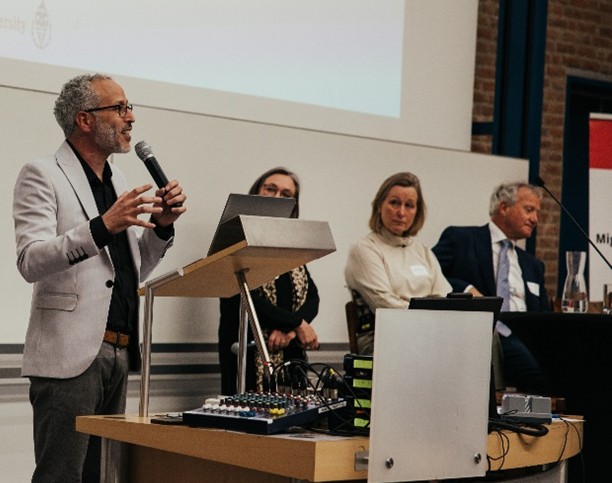
After the presentation, there was a panel discussion, which began with Younous Arbaoui (VU) giving a fascinating mini-lecture on international law for migrant workers. He highlighted the fact that the International Convention on the Protection of the Rights of All Migrant Workers and Members of Their Families (ICRMW or the UN Migrant Workers Convention) has not been ratified at all in the ‘Global North’. Nevertheless, many general UN conventions do apply, and these standards are equally relevant to migrant workers.Besides the applicable ILO Conventions, there is also the Global Compact for Migration (GCM; UN Migration Pact). Although this is soft law, Younous explained with crystal clarity that those standards are quite useful in legal practice. He referred to the handbook for legal practice prepared by British lawyers.
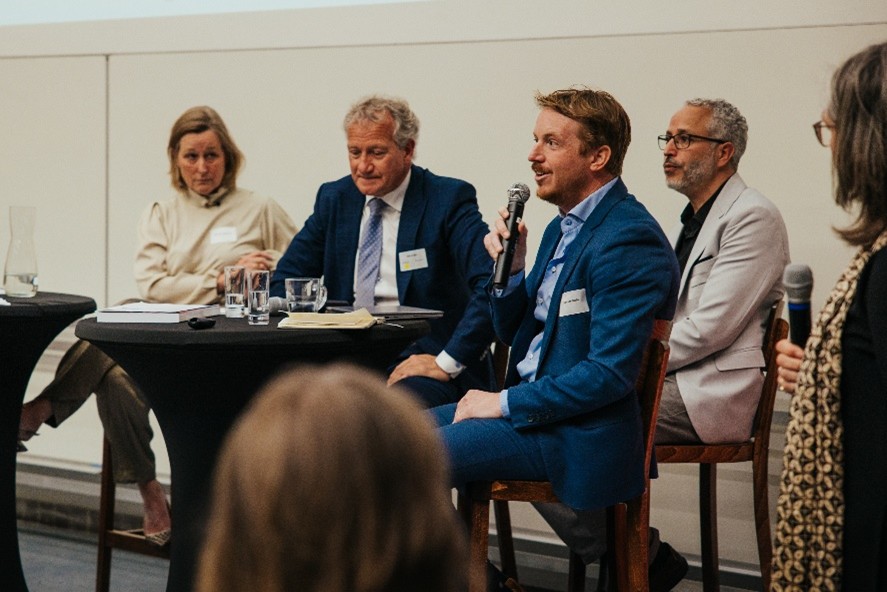
During the discussion with Aldo Kuijer (State Council), Bram van Melle (Everaert Advocaten), Younous Arbaoui (VU) and Ellen Timmermans (Juridisch Loket), the participants enthusiastically contributed good questions and suggestions. Topics discussed included the Employer Sanctions Directive, evidence, and the policy silos in the system of jurisprudence. Finally, the admission of knowledge migrants and skilled workers was also discussed. For the latter, the Netherlands applies a labour market test that does not take labour market shortages into account. Consequently, lawyers appear reluctant to assist employers in recruiting non-EU migrant workers for skilled professions. The right to equal treatment of Union citizens was repeatedly emphasised. Paul Minderhoud highlighted the right to equal treatment of third-country nationals under the European Single Permit Directive. This resonated in the packed lecture hall! Participants will now be looking forward with interest to the new implementing legislation of that directive, which until now seemed to be a somewhat useless instrument in the Netherlands. Finally, the labour rights of illegally employed third-country nationals and the Employer Sanctions Directive were mentioned, effectively bringing migration and labour law together. However, only a few of the migration lawyers in attendance also practise labour law, so there is still work to be done to combine the knowledge of the different ‘silos’ in legal practice, and to encourage cooperation between the disciplines.
In the afternoon, ten interdisciplinary workshops discussed various topics in more detail. Researchers presented their work, reflections from legal practice followed. The red thread? Especially European, but also national rules on entry to the Netherlands and on the legal position or legal protection of labour migrants from inside and outside the EU are not (yet) known to everyone. So there is still a lot of knowledge to share.
Three overarching themes were central:
- Intra-EU mobility now and in the future
- Labour market tightness for highly qualified talent and skilled workers
- Different perspectives on illegal employment
The programme and a summary of the workshops (in Dutch) can be found here.
Closing
The day was closed by Tesseltje de Lange. She was incredibly proud of all the young talent that had presented their work; all very promising interdisciplinary researchers! Her closing words were on societal well-being, human rights and the legal practice of the future. It became a call to have faith in each other and jointly protect the rule of law so that everyone working in the Netherlands can do so in a humane manner.
Do you want to participate in our next sessions, or do you have an idea or question to discuss labour migration related topics? Let us know at cmr-congres@ru.nl