
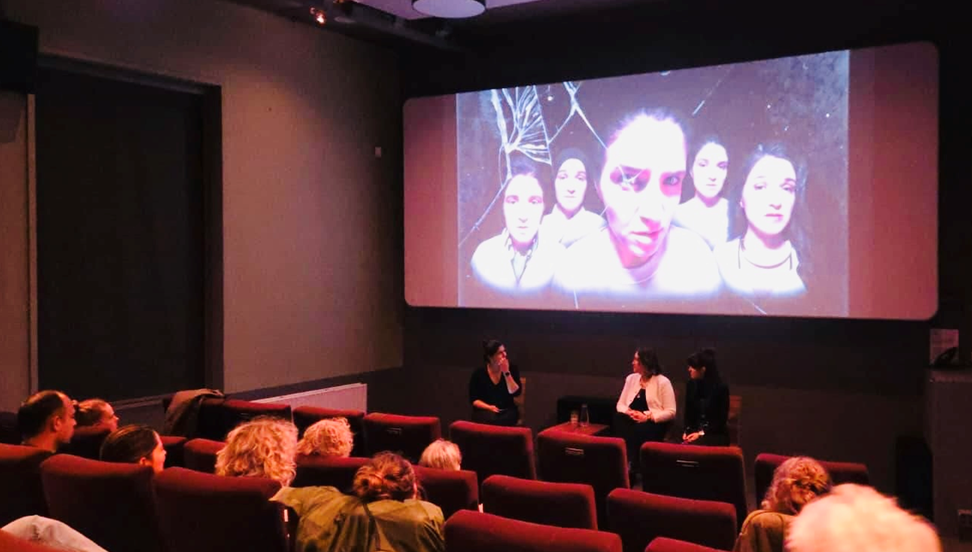
On 12 May, RUNOMI proudly sponsored the premiere screening of The True Mirror: Melisa at LUX Nijmegen. The short film is an artistic production by Dr. Sibel Ozasir Kacar from Radboud University, developed from her doctoral research on women’s entrepreneurship. As an active RUNOMI member, Dr. Ozasir Kacar regularly contributes to discussions and initiatives concerning migration, gender, and entrepreneurship, making this event a natural extension of her scholarly and societal engagement.
The event brought together approximately 20 participants from a diverse range of backgrounds, including academics, students, social entrepreneurs, municipal officers, and representatives from NGOs. The evening began with a screening of the 20-minute film, which offers an artistic interpretation of the lived experiences of women entrepreneurs and the challenges they navigate in contemporary society.
Following the screening, a panel discussion explored the creative process behind translating academic insights into a cinematic format. The panel featured Dr. Sibel Ozasir Kacar and the film’s lead actress and artistic director, Tugba Ozasir. An architect by training, Tugba is currently pursuing a Master’s degree at the London School of Arts, where she explores the intersection of theatre and architecture. The discussion was moderated by Lema Salah, a PhD candidate at Radboud University whose research focuses on leadership, organisational culture, and personnel retention within the Dutch Ministry of Defence.
The conversation addressed a range of themes, including the opportunities and challenges of transforming scientific knowledge into artistic expression, the potential of filmmaking as a vehicle for social impact, and the different perspectives that researchers and artists bring to such collaborations. Audience members actively participated in the discussion, reflecting on how the film successfully conveyed complex issues surrounding gender norms and expectations in entrepreneurship and the labour market. Participants also highlighted the film’s nuanced portrayal of how gender intersects with religion, ethnicity, politics, and patriarchal structures.
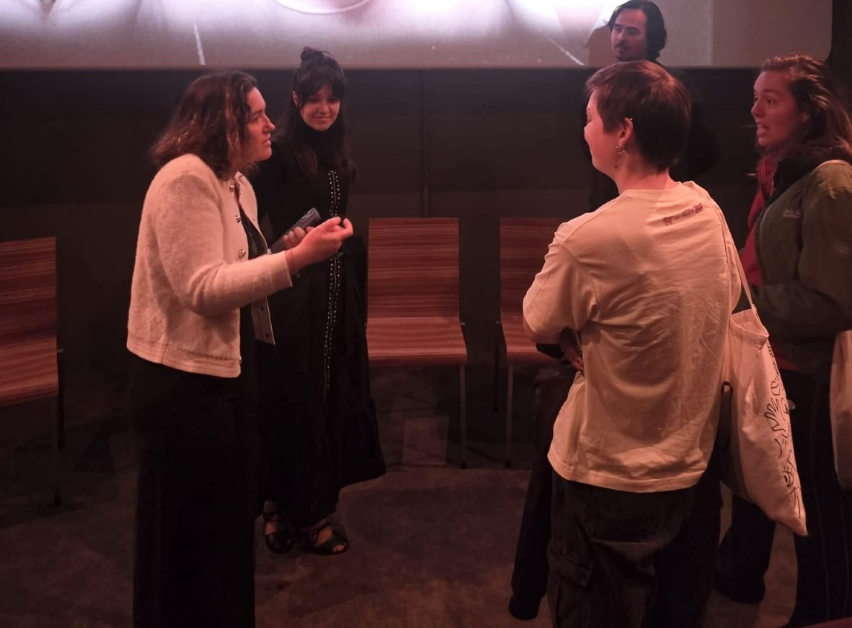
The enthusiasm generated by the screening extended beyond the film itself. Several participants expressed interest in future screenings and workshops focused on translating academic research into artistic formats. Scholars in attendance also voiced interest in learning more about the filmmaking process and the experiences of the women entrepreneurs whose stories informed the production. These conversations generated valuable ideas for future projects and further collaborations between academia and the arts.
Another memorable part of the evening was an interactive reflection exercise facilitated by Ilse Schaminee from the LUX team. Drawing on the film’s central metaphor of the mirror, participants were invited to consider how social expectations shape identities and everyday experiences. Through guided reflection, they explored how aspects such as appearance, communication styles, and professional behaviour influence the ways they are perceived by others. This exercise encouraged participants not only to engage with the film’s themes intellectually, but also to reflect on them through an embodied experience.
While the formal programme lasted approximately 1,5 hours, the conversations continued well into the evening over drinks, generously supported by RUNOMI. In this informal setting, participants shared personal experiences and professional reflections inspired by the film. Many noted that the combination of the screening, panel discussion, and interactive exercise helped them move beyond a purely cognitive understanding of marginalisation and inequality. By engaging emotionally and reflectively with the stories presented, participants gained a deeper appreciation of both the vulnerabilities and the agency of women navigating complex social expectations.
The evening demonstrated the powerful role that artistic forms of knowledge dissemination can play in academia. The True Mirror: Melisa not only communicated research findings to a wider audience but also created space for dialogue, reflection, and connection across different sectors of society. The event highlighted how collaborations between researchers and artists can foster meaningful conversations about pressing societal issues and inspire new ways of generating impact beyond traditional academic outputs.