
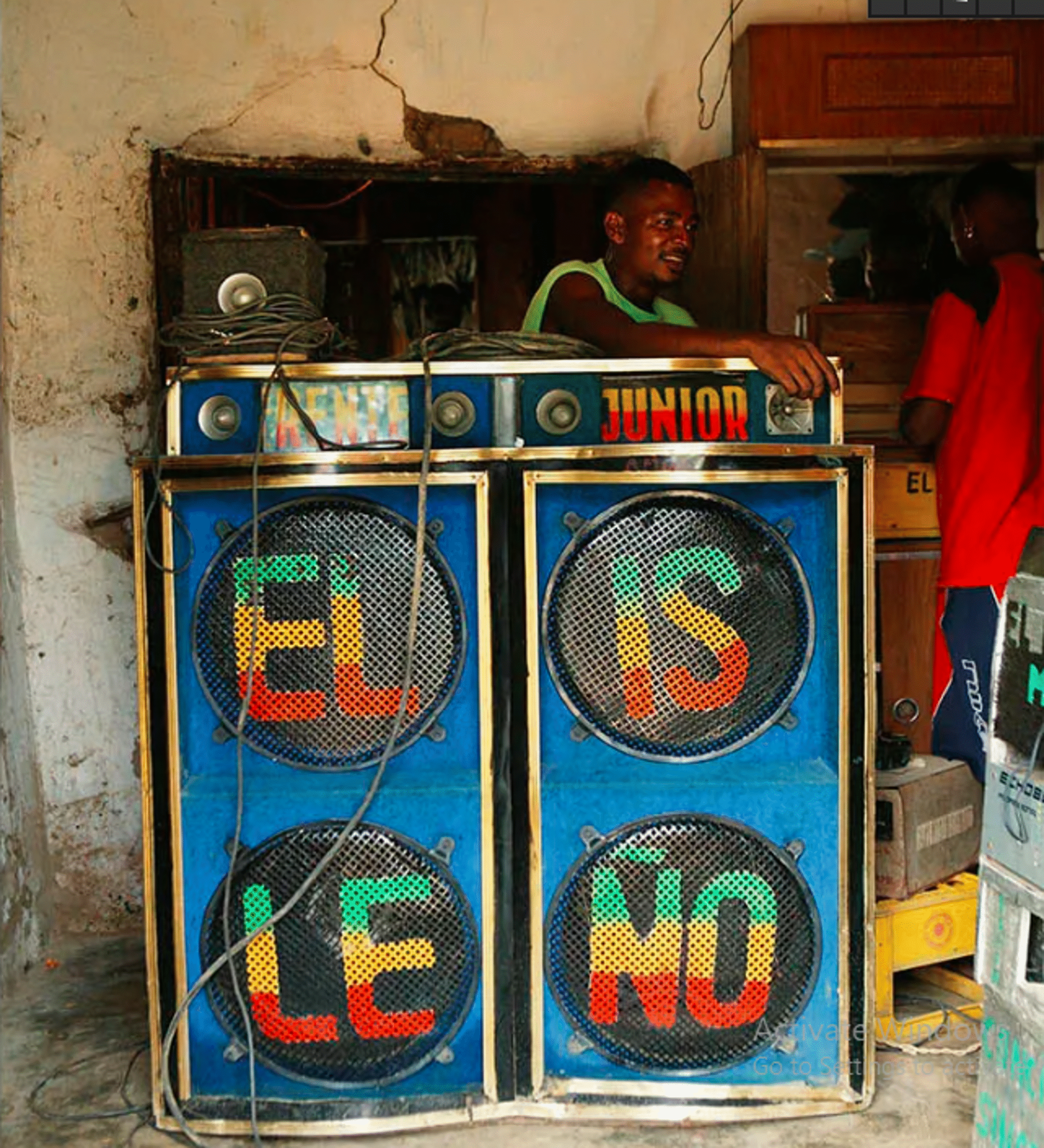
What happens when music leaves Nigeria, travels across the Atlantic, and reaches Colombia, the US, and The Netherlands? How are rhythms, instruments and dance styles mediated, consumed and commodified in these different contexts? How does music change across borders and what can we learn about the AfroDiaspora through these changes? And how do African inspired cultural expressions then travel back from where they originated?
The Urban Cultures in the AfroDiaspora was a virtual international collaboration (VIS) working group focusing on education that was funded by the Implementing Agency for Grants to Institutions which falls under the Ministry of Education, Culture and Science. The purpose of this Collaborative Online International Learning (COIL) programme was first and foremost to encourage students enrolled in universities in four different countries to get to know one another, exchange and work together. For this purpose we chose to discuss socio-cultural expressions, in particular music, with roots in the diversity of Africa, but set in the respective contexts of the students. Through the lens of African rooted and AfroLatin music, ‘Urban Culture in the Afro-Diaspora’ explored the cultural interaction that takes place in cities across the Atlantic in Africa, the Americas and Europe.
Building a virtual classroom
The working group promoted virtual collaboration across languages, cultural boundaries, countries, time zones, and disciplines. Moreover, lecturers encouraged their own students, as well as the students of their colleagues, to intellectualise and profit from a scholarly manner on the topics of music, diaspora, connection, restitution, and migration. The group consisted of seven lecturers affiliated to five universities and over thirty students. It included: Dr. Ngozika Obi-Ani’s students at the history department of the University of Nigeria in Nsukka; Prof. Patrick Oloko’s students from the English Literature department at the University of Lagos (Nigeria); Prof. Jonathan Echeverri and Dr. Stephanie Rupp’s anthropology students from the Universidad de Antioquia in Medellín (Colombia) and the Lehman College in New York (USA) respectively; as well as Dr. Catherina Wilson’s students from the Geography department at Radboud University (The Netherlands). Two additional lecturers were actively involved in designing and teaching this course: Prof. Peju Layiwola from the Department of Art and Art History at the University of Lagos (Nigeria) and at the time a Mellon Curatorial Fellow at the Stanley Museum of Art, University of Iowa (USA); and Dr. Walter Nkwi Gam based at Institute for History at the Leiden University (The Netherlands).
The programme ran from November 2024 through to January 2025. Except for the first and last meeting, each meeting of the working group was structured around two short mini seminars on diverse topics meant to inspire students, but also to learn from one another. These presentations were followed by breakout rooms discussions in which the students agreed on the topics they were to present jointly at the end of the course. We closed each class with a cacophony of goodbyes, every student and lecturer greeting in their respective language. In addition to the Zoom platform in which we met synchronously during six sessions, we held our discussions asynchronously through a joint WhatsApp community that consisted of different groups divided per topic. Documents were shared by email, but equally accessible on a shared Google Drive. Considering music was one of the main topics, one of the students also made a joint playlist on Spotify.
Challenges and lasting connections
The lecturers touched upon diverse topics related to their research and teaching interests; these included: an introductory lecture on music as an expression of history; AfroDiaspora and Afropeanism in the Dutch context; Edo music and the restitution of the Benin bronzes; Contemporary Migration between Africa and the Americas; Mamiwata, Mermaids, and the Circulation of Ideas; Igba-boi apprenticeship systems in urban Nigeria; and Migration and Japa as read through mediatised sketches by Nigerian comedians.
Behind the scenes the conversations and exchange among the lecturers was jovial and convivial and we learned a lot. Getting the students to bond was challenging as it was not always easy to engage in conversation across languages and time barriers. Moreover, the nature of a pilot project which was not officially embedded in a course for all of the students, and which was modified throughout the course of the semester, requiring a lot of flexibility from the students, posed further challenges. Nevertheless, the students remained voluntarily engaged until the end. From the point of view of the lecturers, we would kindly advise future initiatives to acknowledge the hours of all the partners involved, also of those working outside of the Netherlands. This is of utmost importance as to not replicate colonial structures based on invisible and unpaid labour.
Despite the challenges, bonds were made and shy friendships sprouted from the soil, both among the students as well as between the lecturers. These bonds became visible during the last session of the programme during which the students presented their final projects. This session took place during the conference “AfroDiasporic Circulations: A ‘South-South’ Dialogue across the Atlantic” held at the Radboud University on January 15 and 16, 2025. In total there were five presentations touching upon the following topics: Afro Music in Daily Life with examples from Colombia and Nigeria; Champeta rhythms ricocheting off the Atlantic; Music as Resistance in the AfroDiaspora, Music as an element of Cultural Fusion, and the Nigerian Oja flute and its reinterpretation in the Colombian Gaita. The jovial mood that characterized each COIL meeting was palpable during the last session too, especially as we listened with delight to our Nigerian students present on Colombian music and our Colombian students present on Nigerian music.
With regards to the future of the Urban Culture in the AfroDiaspora, the bridges and network that were created stand firm and could easily be activated for similar education and research programs in the coming years. If held again, the course would benefit from a rotating coordination. Lecturers, already knowing what to expect, can work on embedding it more concretely into existing courses at their respective universities in order to make it more attractive to their students. Even though the virtual is a useful tool to create, and especially to maintain, bridges, it cannot replace face-to-face exchanges among students and lecturers. Hence, we hope that this collaboration will lead to physical encounters that will allow us to continue exchanging and reflecting on the exciting topic of Culture in the AfroDiaspora.